
An event hashtag is a custom keyword prefixed by # that groups social media posts about a specific event. That definition sounds almost too simple for the amount of work organizers put into choosing one. The reason is straightforward: event hashtags are digital marketing tools that raise the visibility and engagement of the posts carrying them. A caption with the right tag attached can travel further than the same caption without it, and a caption written well gives people a reason to stop scrolling in the first place.
This guide covers how to choose the tag, when to start using it, how to write captions that support it, and where an AI assistant such as the one built into Eventweet can speed up the drafting without flattening your event's voice.
Why Event Hashtags Still Do Real Work
People use hashtags to discover events, share their experiences of those events, and connect with other attendees. That single sentence describes three different jobs, and a good tag handles all of them at once. Discovery happens before the event, when someone searching a topic or a city stumbles onto your posts. Sharing happens during and after, when attendees post their own photos and reactions. Connection happens in the space between, as strangers recognize each other through a shared tag.
For organizers, the practical benefit is aggregation. Instead of hunting through scattered mentions, everything tagged with your event hashtag collects in one searchable stream. That stream becomes a live record of the event, a source of user-generated content you can reshare, and a measurable signal of how much conversation the event generated.
What Separates a Useful Event Hashtag From a Forgetful One
Most weak event hashtags fail for predictable reasons. They are too generic, too long, or too disconnected from what the event actually is. The guidelines below come from established event marketing practice and hold up whether your event is a conference, a networking night, a product launch, or a community meetup.
Make It Unique to Your Event
A hashtag that could apply to any gathering in any city does not belong to you. Create a tag specifically for your event so attendees and potential attendees can find all related posts in one place. If your tag is already saturated with unrelated content, your posts disappear into someone else's conversation, and attendees who try to follow along give up.
Keep It Short and Easy to Type
Aim for a hashtag that is memorable and simple to type. Three to five words at most is a useful ceiling. Length matters because people type tags on phones, often one-handed, often in a hurry. A tag nobody can spell correctly is a tag nobody uses. Read yours out loud: if you have to repeat it or explain the spelling, shorten it.
Tie It to the Event Theme
Relevance keeps the tag meaningful after the first wave of posts. A tag connected to the event theme tells someone who has never heard of your event what it is about, and it gives your team a natural language to reuse in follow-up content. Vague or abstract tags tend to fade because nobody has a reason to remember them.
| Check | What to aim for |
|---|---|
| Uniqueness | A tag that belongs to your event rather than a generic topic |
| Length | Three to five words at most |
| Memorability | Easy to type and easy to repeat out loud |
| Relevance | Clearly connected to the event theme |
| Timing | Introduced roughly three weeks before the event |
Start Using the Hashtag Three Weeks Before the Event
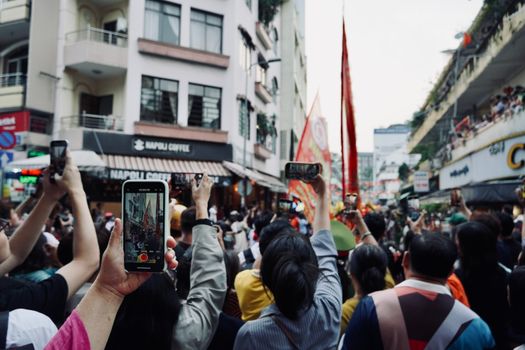
One of the most consistent pieces of advice in event hashtag guidelines is to begin using the tag three weeks in advance. That window gives the tag time to build recognition before the day itself, and it means people arriving at the venue already know what to post. If you introduce the tag on the morning of the event, you are teaching attendees a new word while they are distracted by registration lines and name badges.
Three weeks also gives you room to run pre-event content that does not feel repetitive: countdown posts, speaker or host introductions, behind-the-scenes preparation, and practical logistics reminders. Each of those posts can carry the tag without turning your feed into a single repeated advertisement. When the event finally starts, the tag is already familiar, and attendees use it without being asked twice.
Caption Writing Rules That Come From Event Marketing Practice
Hashtags handle discovery. Captions handle the human part. Experienced event marketers tend to return to the same handful of caption principles, and they translate well into short social posts.
Use the Hashtag as an Ice-Breaker
A tag gives strangers a shared reference point and a low-pressure way to say something. Captions can lean into that by asking a light question, inviting a photo, or naming the thing everyone in the room has in common. The goal is a caption that makes replying feel easier than scrolling past.
Don't Come On Too Strong
Pushy captions age badly. Posts that demand engagement, overuse exclamation, or repeat the same call to action across a dozen updates tend to be ignored rather than shared. Write captions that sound like a person talking about an event they care about, and let the tag do the organizational work.
Steer Clear of Oversharing
Oversharing can mean posting details that should stay private, but it also means cluttering a caption with too much information at once. A caption that tries to announce the schedule, the venue, the ticket link, three sponsors, and two reminders usually communicates none of it. Pick one idea per post, and let the event page carry the rest.

Where an AI Assistant Actually Helps
Drafting is the slow part of social promotion, not the thinking part. Eventweet includes an AI prompt generator that produces event descriptions, marketing assets, and promotional copy, and its social integrations are built for cross-platform promotion. In practice that means you can move from a rough idea to ten usable caption variations in a fraction of the time it takes to write them from scratch.
The assistant is most useful under constraints. Give it your event hashtag, the tone you want, the platform, and the length, and it will produce drafts that respect those limits. You keep the judgment calls: which draft sounds like your event, which one has a detail that is slightly off, and which one is good enough to publish with a single edit.
A Prompt Pattern You Can Reuse
Vague prompts produce vague captions, which is why the constraint-first approach works better. A repeatable prompt includes five elements:
- The event type and audience, stated plainly.
- The exact hashtag, so every draft uses the same tag.
- The tone, such as warm, professional, playful, or understated.
- The format, such as a short caption, a countdown post, or a post-event thank you.
- The single idea the post should communicate.
Ask for several variations rather than one finished caption. Comparing options is faster than redirecting a single draft, and the differences between drafts usually reveal the phrasing that fits best. Keep one strong line from each round and you build a bank of caption openers for the rest of the campaign.
Keeping Captions Alive After the Event
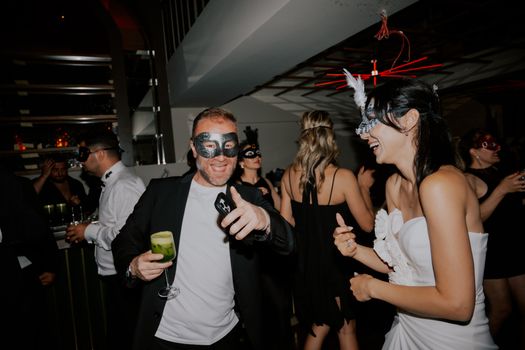
The hashtag does not expire when the event ends. A thank-you post, a photo roundup, or a short recap of what people talked about keeps the tag active and gives attendees a reason to return to it. Post-event captions can also point people toward whatever comes next, whether that is a follow-up meetup, a recording, or simply a place to stay in touch. The organizer benefit is real: a tag that stays in use after the event makes the next event easier to launch, because the audience is already gathered in one searchable place.
If you are running the whole promotion through one tool, Eventweet's event creation, RSVP tracking, and AI content tools sit in the same workspace, which reduces the copy-paste work between drafting a caption and publishing it. Verify current feature availability on the platform before you build a workflow around any single tool.
Frequently Asked Questions
How long should an event hashtag be?
Three to five words at most is the practical ceiling. Anything longer becomes hard to type on a phone and easy to mistype, which reduces how often attendees use it. Short and memorable beats descriptive and precise. If your tag needs explaining, cut it down before you print it anywhere.
When should I start using my event hashtag?
Established guidelines suggest starting roughly three weeks before the event. That window builds recognition while attendees are still deciding what to post, and it lets you run varied pre-event content instead of repeating the same announcement. Introducing the tag on event day usually means teaching people a new word while they are distracted.
Should every caption include the event hashtag?
Not necessarily. The tag belongs on posts meant to be grouped and discovered, such as announcements, countdowns, attendee prompts, and recaps. A caption that is mostly a direct reply to one person does not gain much from it. Use the tag where aggregation helps and leave it off where it would look like filler.
Can an AI assistant write captions that sound like my event?
Yes, if you supply constraints. Give the assistant your hashtag, event type, audience, tone, and the single idea for the post, then ask for several variations. The drafts will still need your judgment, since you know details the assistant does not. Treat output as a fast first pass, not a final version.
What is the most common mistake with event hashtags?
Choosing a tag that is too generic or too long, then relying on it to do work it cannot do. A tag unique to your event and short enough to type easily will outperform a clever one that nobody remembers. Pair it with captions that avoid oversharing and avoid pushing too hard for engagement.