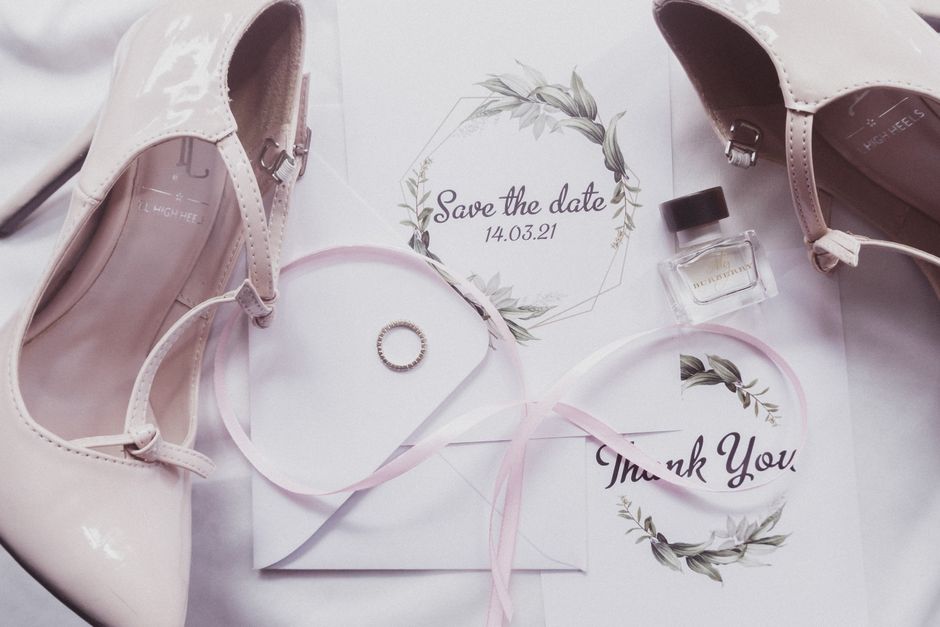
A save the date notice used to carry one instruction: keep this evening free. That was the whole job. Couples set a date, booked a venue, and mailed a small card that told guests to expect a formal invitation later. The card itself was a placeholder, useful but plain, and nobody expected it to say much beyond a name and a date.
That has changed in visible ways. Save the date cards have evolved beyond mere date reminders, and they now serve as a platform for couples to showcase their unique love story, according to Wedgewood Weddings. The notice moved from logistics to storytelling, and the formats, finishes, and delivery methods moved with it. What follows is a look at what shifted, what the current record actually supports, and where couples should slow down and verify details for themselves.
The Original Job: One Date, One Reminder
The core function has never really disappeared. Save the date cards remain a popular way for couples to announce an upcoming wedding and make sure their loved ones mark the date on their calendars. That definition comes from Wedgewood Weddings, and it describes a card with a narrow, practical purpose.
The timing of the decision has stayed familiar too. In a wedding planning discussion on Reddit, one couple described the moment clearly: they had just set a date and booked a venue, and were now trying to decide how to choose their save the date cards. That sequence, date first, venue second, announcement third, is the same order couples have followed for a long time. The card was never the starting point. It was the signal that planning had genuinely begun.
A Notice That Started Telling a Story
The biggest change is what the card is asked to do. Where an older save the date confirmed a date, a current one often introduces a couple. Photos, colors, and design choices carry personality that a plain notice never attempted, and the card becomes a first impression rather than a formality.
That shift is recent enough to show up in the way retailers describe their own products. Basic Invite frames its 2025 collection around thousands of designs that can be customized instantly online, and Canva presents its save the date gallery as a set of fully customizable templates where couples design and print high-quality cards without a designer involved. The card is no longer just information. It is a small design project, and couples treat it that way.
Where personality shows up first
Paper Source offers wedding save the date cards that can be customized instantly to match a couple's unique style, available in card or postcard sizes with or without a photo. That single product description captures two of the largest shifts in the category: the choice between a card and a postcard, and the choice between featuring a photograph or letting typography and color do the work.
Format Changes Couples Can Choose From Today
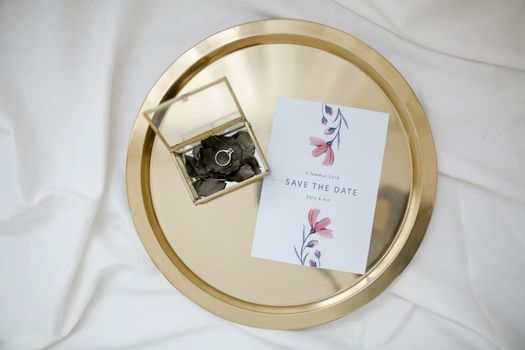
The range of formats has widened, and each option sends a slightly different message. The table below reflects what current retailers and design platforms list in their own catalogs, drawn from the sources referenced in this article.
| Choice | What it looks like | Where it appears |
|---|---|---|
| Card size | A traditional flat or folded notice, often paired with an envelope | Paper Source, Basic Invite |
| Postcard size | A lighter mailer that skips the envelope | Paper Source |
| Photo or no photo | An engagement image on the front, or a purely typographic design | Paper Source, Minted |
| Vellum | A translucent overlay that sits above the printed card | Pinterest design boards |
| Gold foil | A metallic finish offered as a catalog filter | Basic Invite |
None of these options is new in isolation. What changed is that all of them are available in the same place, at the same time, from a browser. Vellum overlays and vellum paper appear repeatedly on Pinterest save the date boards, and foil finishes show up as a filter customers can simply select. Customizable styles from Minted sit alongside the rest. Collecting these choices once meant visiting a stationer, flipping through books, and waiting on proofs. Now it means scrolling a filtered catalog.
Instant Customization Replaced the Long Print Cycle
The production timeline is where the decades show most clearly. A couple browsing Basic Invite can work through more than a thousand new 2025 save the date designs and customize any of them instantly online, with cards listed as low as 45 cents each. Canva makes the same promise in different language, offering a gallery of editable cards, then delivering custom prints to a doorstep or accepting an uploaded design.
That combination, edit on screen and receive printed cards, compresses a process that used to depend on back and forth with a print shop. It also lowers the skill barrier. A couple with no design training can start from a template, change the text, swap the photograph, and order. The design decision moved from a specialist task to a routine one.
Delivery Changed Alongside the Design
Sending has shifted as much as designing. Etiquette guidance now covers the best ways to send save the dates in a digital age, which is a telling phrase. A printed card is still the default for many couples, but the question of whether to send physically or digitally is now part of the conversation rather than an assumption.
Print has not disappeared under that pressure. If anything, print retailers added services to compete with digital speed. Paper Source lets customers book a free consultation for help creating save the dates, which is a service aimed at couples who want guidance rather than a template. The two paths, fully self-serve and guided, now run side by side.
Print Perks That Reshaped the Buying Experience
The extras bundled with an order changed how couples compare options. These are the kinds of perks currently advertised by the retailers referenced in this article:
- Free guest address envelope printing with every order, offered by Basic Invite
- Custom sample kits, ordered through a sample button on individual card designs
- Free standard shipping on orders above a set threshold at Paper Source
- A discount of up to 40 percent on personalized stationery, wedding invitations, and custom cards
- Free shipping on printed designs ordered through Canva
Each of these removes a task that once belonged to the couple. Address printing alone replaces hours of handwriting. Sample kits replace guesswork about paper weight and print quality. A couple can now judge a card in hand before committing to a full order, which is a meaningful change from choosing blind from a catalog photograph.
The Questions Couples Still Ask
Some things about save the dates remain unsettled, and the sources reviewed here do not resolve them. When the practice first became common is not clearly documented in the material available, and questions such as where to find embossed save the date cards or exactly how far in advance to send them are not answered consistently across the etiquette guides that discuss them.
What the guides do cover is styles, timing, and how to choose a design for a wedding. If exact timing matters to your plans, particularly for a destination event or a holiday weekend, confirm it with your stationer and your venue rather than relying on a general rule from a search result. Guidance varies, and the couple's own guest list usually settles the question faster than a blog post does.
What Event Organizers Can Borrow From Save the Date Cards
The lesson from this evolution applies well beyond weddings. A save the date works because it arrives early, asks for one small action, and does it with enough personality that people remember it. Any event announcement benefits from the same three ingredients, whether it is a wedding, a conference, or a neighborhood gathering.
Modern event tools aim at the same outcome. Eventweet combines location-based event discovery with event creation, RSVP tracking, ticketing, and social networking features such as profiles, feeds, posts, and comments. It also includes an AI prompt generator for event descriptions and marketing assets, which serves roughly the role a design template plays for a save the date card: it removes the blank page and shortens the distance between having a date and telling people about it.
That is the through line across the decades. The notice got faster to make, easier to personalize, and more likely to say something about the people behind it. The instruction at the center of it never changed. Save the date, and expect more to follow.
Frequently Asked Questions
When did save the date cards first become popular?
The sources reviewed for this article cover etiquette, styles, and current trends rather than a firm origin date, so a precise starting point is not something they support. What they do show is a clear direction of travel: from a plain date reminder toward a designed piece that introduces a couple. Treat confident origin claims you find elsewhere with some caution and verify them.
Can save the dates be sent digitally instead of by mail?
Yes, and that option is now part of mainstream etiquette discussion. Guidance from Wedgewood Weddings explicitly addresses the best ways to send save the dates in a digital age, which means the digital route is treated as a legitimate choice rather than a shortcut. Many couples still order printed cards, and the two approaches often get combined.
Do save the dates have to include a photograph?
No. Paper Source lists wedding save the date cards in card or postcard sizes with or without a photo, so a purely typographic design is a standard option. Photo cards emphasize the couple, while text-led designs lean on typeface, color, and finish. Both are treated as normal within current catalogs, and the choice comes down to style rather than rule.
What formats and finishes can I choose today?
Current catalogs list card and postcard sizes, with or without photos, plus specialty finishes. Basic Invite offers gold foil as a filterable option and advertises instant online customization across more than a thousand designs. Pinterest boards show vellum and vellum paper overlays in heavy rotation, and Minted highlights customizable styles. Availability shifts, so confirm specifics with the retailer before ordering.
How far in advance should a save the date go out?
The research reviewed here does not settle this with a single figure, and etiquette sources vary in how they frame timing. Rather than follow a general rule, ask your stationer and your venue, especially if your event falls on a holiday weekend or requires travel. Guests with longer journeys usually benefit from earlier notice, so match the send date to your guest list.