
A guest reads the RSVP line on your invitation and makes a decision in seconds. Either the request tells them exactly what to do next, or it leaves them guessing about the deadline, the reply method, or how many people they may bring. Fitting those answers into a short, polite block of text is the entire job of RSVP request wording.
Wording collections across the wedding and event space keep circling the same handful of patterns, and most of them work for any celebration. The examples here come from published RSVP wording guides, so you can borrow them, swap in your own bracketed details, and send.
What Every RSVP Request Needs to Say
Before you worry about tone, check that the practical pieces are present. A complete RSVP request answers five questions without forcing a follow-up message.
- Who is invited, either by name or through a fill-in line.
- Which date the reply is due.
- How the guest should respond, such as a response card or an online form.
- What you need back, such as a confirmation, a guest count, or a meal choice.
- Anything that limits the invitation, such as reserved seats or venue capacity.
Once those elements sit on the card or form, the wording gets much easier. You are no longer writing from scratch. You are choosing the phrasing that matches how formal the event feels.
RSVP Request Wording for Printed Cards
Printed response cards carry the most tradition, and they usually move in one of two directions: a formal register or a relaxed one. Both work. The one thing to avoid is blending the two inside the same short block of text.
Formal response card wording
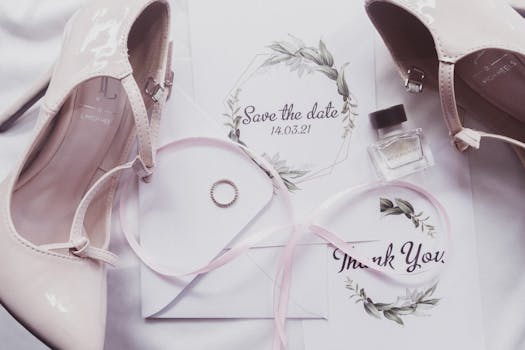
Formal invitations often pair a full sentence invitation line with a brief reply instruction. A familiar opening reads: "Dear [Guest Name], You are cordially invited to attend [Event Name], which will take place on [Date] at [Time] at [Venue]." The reply line below stays short, along the lines of "Kindly respond by September 15."
Another standard option is "Please reply by [date] to confirm your attendance," with two checkboxes beneath it: "Accepts with pleasure" and "Declines with regret." That pairing tells the guest what each answer means and saves you from interpreting a card that comes back blank.
Casual response card wording
Relaxed wording keeps the deadline but drops the ceremony. "Please RSVP no later than Sept. 15!" carries the same information as the formal version while sounding like a friend asking for a small favor. For a birthday, a housewarming, or a backyard gathering, that register usually fits better than "Accepts with pleasure."
Asking for a Guest Count or Reserving Seats
Events with limited space need a headcount, and the reply line is the right place to request it. Three formats show up again and again in RSVP wording guides.
- A fill-in format: "___ of ___"
- A labeled field: "Number of guests attending: ___"
- A reserved seat line: "We have reserved ___ seats in your honor"
The reserved seat version does extra work. It welcomes the guest and fixes the number at the same time, which lowers the odds that someone adds a plus one at the last minute. When capacity is genuinely tight, hosts sometimes add one sentence of explanation, such as: "Please note our venue has strict capacity limits and we've set aside [number] of spots in your honor."
RSVP Request Wording for Online Forms and Digital Invites
Digital replies have become the new normal for many celebrations because they are quicker for guests and easier to track in one place. The wording shifts a little, since the guest needs a link rather than a card and a stamp.
A polite online request can be as short as "Please RSVP by [date]." When you want the reply to come through a website, put the location and the deadline together: "We kindly request that you RSVP online at [website link] by [date]."
Some hosts lead with the reason rather than the instruction. That pattern opens with "To help us finalize" and then names what you need, followed by the response instruction and the deadline. It frames the request as teamwork instead of paperwork.
Meal choices and extra details
When a seated meal is part of the event, the reply form is the natural place to collect the choice. RSVP wording guidance treats printed cards, online forms, and meal selections as separate formats, and the same rule applies to all three: keep the options short and make the default obvious. If a guest may pick only one, say so in a few words rather than a paragraph.
Formal and Casual Wording Side by Side
The table below gathers the phrasings that appear most often in RSVP wording examples. Use it as a menu rather than a script, and keep every reply line for a single event in the same tone.
| What you are asking for | Example wording |
|---|---|
| Formal deadline | "Kindly respond by September 15." |
| Deadline with online reply | "We kindly request that you RSVP online at [website link] by [date]." |
| Casual deadline | "Please RSVP no later than Sept. 15!" |
| Simple deadline | "Please RSVP by [date]." |
| Formal acceptance | "Accepts with pleasure" |
| Formal decline | "Declines with regret" |
| Guest count, fill in | "___ of ___" |
| Guest count, labeled | "Number of guests attending: ___" |
| Reserved seats | "We have reserved ___ seats in your honor" |
| Capacity note | "Please note our venue has strict capacity limits and we've set aside [number] of spots in your honor." |
Deadline Phrasing That Actually Gets Replies
The deadline is the part guests skip, so it deserves the clearest words on the page. Name a single date and repeat it in exactly the same form everywhere the RSVP appears, whether that is the printed card, the online form, or your event listing. Two different dates in two different places is the fastest way to slow your replies down.
A written date beats a vague one every time. "Kindly respond by September 15" leaves nothing open. A phrase like "please respond soon" invites a guest to file the invitation away and handle it later.
Reminders should echo the original request rather than introduce new terms. If your first message asked for an online reply, the follow-up should point to the same link and the same date. When you change the wording, guests have to re-read the whole invitation to check whether anything else changed too.

Small Choices That Cut Down Follow-Up Questions
The kindest RSVP wording is the kind that prevents a text message. A few habits do most of the work.
- Put the deadline in the same sentence as the response instruction, so the guest never has to hunt for it.
- Write the reply line at the same reading level as the invitation itself, then leave it alone.
- Ask for the guest count and the meal choice in the same place if you need both, rather than sending a second request later.
- Explain a limit once, in plain words, instead of apologizing for it.
Format matters here too. A printed card suits a formal event and a guest list that enjoys stationery, while an online form suits a large list and a host who wants responses collected in one place. The wording can stay almost identical across both once you replace the reply card with a link.
Read your RSVP request as if you were the guest. If you can tell who is invited, when to reply, how to reply, and what you need to decide, the wording is finished. If any of those four pieces is missing, the most elegant phrasing on the card will not make up for it. Add the missing detail, keep the sentence short, and send.
Frequently Asked Questions
How do you politely ask for an RSVP?
Keep the request short, name the deadline, and say how you want the answer. "Please RSVP by [date]" is polite on its own. For a more formal tone, use "Kindly respond by September 15" or "Please reply by [date] to confirm your attendance" with "Accepts with pleasure" and "Declines with regret" as the two reply options.
What is good wording for a formal RSVP?
Formal reply lines lean on full phrases and a fixed date. "Kindly respond by September 15" and "Please reply by [date] to confirm your attendance" both read well on a printed card. Pair them with "Accepts with pleasure" and "Declines with regret" so the guest simply marks a box rather than writing a note.
What should an RSVP message for an online reply say?
Give the link and the deadline in one sentence. "We kindly request that you RSVP online at [website link] by [date]" does both jobs in a single line. A shorter option is "Please RSVP by [date]" with the link placed directly underneath it. Whichever you choose, repeat the same date in any reminder you send later.
How do you ask for a guest count or reserved seats?
Use a fill-in line so the answer is unambiguous. Common options include "___ of ___", "Number of guests attending: ___", and "We have reserved ___ seats in your honor." The reserved seat version works well when space is limited, because it tells the guest the number is already fixed before they reply.
What is a good message to confirm an RSVP?
When you are the guest, the clearest confirmation is a direct one: "Accepts with pleasure" on a formal card, or a short note stating your name and how many people will attend. Adding a meal choice at the same time saves the host from asking twice, and it keeps the reply usable for their seating and catering plans.