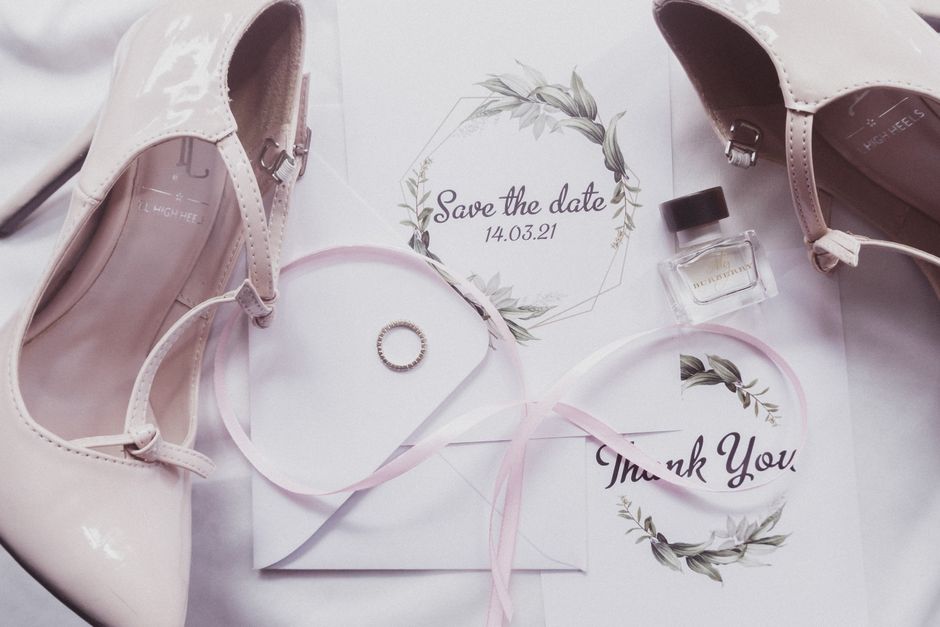
Save the date wording has one job: tell guests a wedding is happening, give them the date and location, and ask them to hold it. Everything else is optional. That single idea clears up most of the stress people feel when they sit down to write these cards. The date matters. The names matter. The rest is style.
Style is also where the fun lives. A formal card and a playful one can carry the exact same information and still feel like they came from two different celebrations. What follows is a working set of examples, etiquette notes, and grammar fixes you can borrow for a wedding, and adapt for any event that needs an early heads-up.
What Save the Date Wording Actually Needs to Do
Save the dates are announcements, not invitations. They arrive months ahead of the formal paperwork, and their purpose is simple: an early heads-up for friends and family, basically asking them not to make any big plans on your big day. Once you accept that, the pressure to write something poetic fades.
Every save the date needs four pieces of information. Skipping one is the most common reason guests end up texting the couple with questions instead of marking a calendar.
| Element | Why it belongs | Example line |
|---|---|---|
| Both names | Guests need to know whose event this is | [Name] and [Name] |
| The date | The entire point of the card | Save the date: Saturday, [Month Day, Year] |
| General location | City, state, and country help guests plan travel | [City], [State] |
| A note about what comes next | Signals that full details are still coming | Wedding invitation to follow |
Notice what is missing: times, dress codes, menu choices, seating charts. Those belong on the invitation. A save the date that tries to do too much reads as crowded and slightly anxious.
Formal Save the Date Wording
Formal wording leans on full names, complete sentences, and a calm tone. Traditionally, the bride's name goes first, followed by the groom's name, though many couples now order names however they prefer. If you are writing for a formal event, keep the language declarative and resist exclamation points.
- Please save the date for the wedding of [Name] and [Name].
- [Name] and [Name] request the pleasure of your company on [Month Day, Year] in [City, State].
- Save the date: the marriage of [Name] and [Name], [Month Day, Year], [City, State].
- Mark your calendar for the wedding of [Name] and [Name]. Wedding invitation to follow.
The phrase "Wedding invitation to follow" does a lot of quiet work. It tells guests they are wanted, and it also tells them nothing else is expected of them yet. Formal cards rarely need a second line beyond that.
Casual and Playful Save the Date Wording
Relaxed wording gives you room to sound like yourself. Short phrases work best. Some of the most commonly borrowed lines are "We set a date!", "The wedding of the year is here," "It's about time," "Save our date," and "You've got plans." Each one lands the same information with a different shrug, wink, or grin.
- We set a date! [Month Day, Year], [City, State].
- It's about time. Save our date: [Month Day, Year].
- The wedding of the year is here, and you are on the list. Details to come.
- You've got plans on [Month Day, Year], and now you know it.
- Clear your calendar, we finally picked a date.
Playful wording works best when it stays short. A funny line plus a long explanation stops being funny. Let the date and location carry the practical load and let the joke stand alone.
Destination Wedding Wording
Destination save the dates carry more weight because guests are making travel decisions. Style guides suggest that travel information belongs on these cards earlier than usual, along with the general location listed as city, state, and country. You do not need flight numbers or hotel blocks yet, but guests should be able to look up the destination and start pricing a trip.
- Pack your bags. [Name] and [Name] are getting married in [City, Country] on [Month Day, Year].
- Save the date for a wedding in [City, Country]. Travel details and invitations to follow.
- We're saying "I do" in [City, Country]. Save [Month Day, Year] and start planning.
If the venue is remote or requires a passport, a gentle heads-up in your own words is welcome. Keep it to one line and leave the logistics to a wedding website or a follow-up note.
Changing the Date: How to Word an Update
A date change is awkward, and the wording should acknowledge it without over-apologizing. The most common approach opens with a line like "Our plans have changed" before sharing the new date. Another widely used example pairs reassurance with the update: "New date, same great love! Please save our new date: August 14, 2025."
Three things help when you rewrite a save the date. Say clearly that the date has changed, repeat the new date in full, and keep the tone forward-looking. Avoid lengthy explanations. Guests mostly need to update their calendars, not understand the reasoning.
Save the Date Etiquette Worth Knowing
Etiquette guidance for save the dates is brief and consistent. Following it saves you from a second round of mailings.
- Note which days guests should save. If a welcome dinner or brunch is part of the plan, say so.
- Provide travel information for anything that requires a trip, especially destination events.
- Hint at the upcoming invitation so guests know more is coming.
- Hold some details back. Registries, menus, and dress codes belong with the invitation itself.
One more convention: save the dates are announcements, and traditionally the bride's name goes first, followed by the groom's name. Many couples follow this, and many do not. Either way, choose an order and use it consistently across every piece of paper you send.
Grammar and Formatting Details That Trip People Up
The phrase is correct in two forms, and the difference is grammar, not preference. As a noun, it stays three words: "save the date." As an adjective, it takes hyphens: "save-the-date card." Both "save the date" and "save-the-date" are correct in their own place, so a card can include a save-the-date design and also read Save the Date at the top.
Capitalization is a matter of design. Title case (Save the Date) reads as a heading. Sentence case (Save the date) reads as a friendly instruction. Whichever you pick, apply it to the headline and leave the rest of the card in normal case so the date stands out.
Dates deserve special attention. Write the day of the week and the full date together so there is no ambiguity about month and day order. Include the year even if it feels obvious, because guests receiving the card in one year may be planning for the next.

Matching the Tone to Your Event
Formal wording suits black-tie celebrations, religious ceremonies, and events with a structured program. Casual wording suits backyard parties, elopements with a reception afterward, and celebrations where the tone is informal by design. The safest approach is to write the version that sounds like the way you would actually tell a friend.
The same structure applies beyond weddings. A family reunion with a fixed date, a milestone anniversary, a graduation party, or a large community gathering all benefit from an early save the date that lists the date, the general location, and a note that details will follow. If you are organizing through a platform such as Eventweet, an AI prompt generator can draft event descriptions and promotional copy in whichever tone you choose, and RSVP tracking keeps the guest list moving in one place rather than across scattered messages.
Frequently Asked Questions
What should save the date wording include?
Every save the date needs both names, the date with the day of the week and the year, the general location written as city, state, and country, and a line such as "Wedding invitation to follow." That last phrase tells guests the full details are still on the way. Times, dress codes, menus, and registries belong on the invitation instead.
What can I say instead of "save the date"?
Plenty of short alternatives work, including "We set a date!", "The wedding of the year is here," "It's about time," "Save our date," and "You've got plans." Each phrase still asks guests to hold the day. As long as the actual date and location appear clearly, a different opening line changes nothing practical.
Is it "save the date" or "save-the-date"?
Both are correct, but they serve different roles. As a noun, it stays three separate words: save the date. As an adjective describing a card or a design, it takes hyphens: save-the-date card. So a single mailing might use a save-the-date design and also print the words Save the Date at the top.
How do I word a new date if the date changes?
Lead with the change, then repeat the new date in full. Common examples include "New date, same great love! Please save our new date: August 14, 2025," or an opening line like "Our plans have changed." Keep it short and forward-looking. Guests mainly need to update their calendars, not hear the full story behind the shift.
When should save the dates go out?
Timing depends on whether guests need to travel. Destination events and dates that fall during busy seasons benefit from the earliest possible notice, while local celebrations give guests more flexibility. Verify your own timeline with your venue and any vendors before printing, since their schedules and deadlines may shape when your cards need to be in the mail.