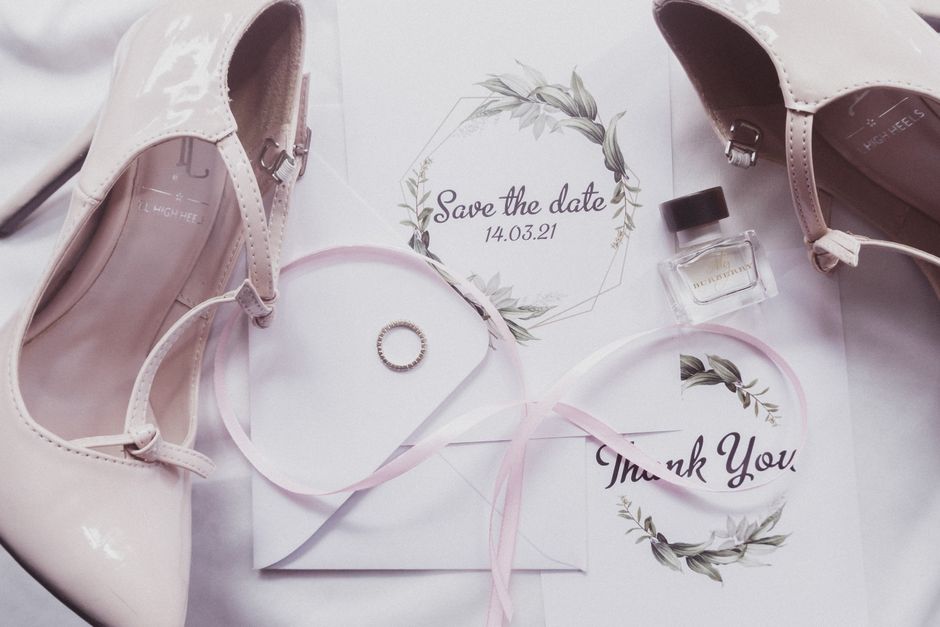
A save the date card carries very little information. A name or two, a date, and a promise that more is coming. What makes some of them feel traditional is not length but structure: the order of the names, the register of the language, and a small set of phrases that planners and etiquette writers keep returning to year after year. Traditional save the date wording is a formula, and like most formulas it works because guests already know how to read it.
One caution before the details. Plenty of pages online tell a tidy origin story about when save the dates first appeared and how they spread between countries. The etiquette sources behind this article document current wording practice and examples rather than a verified chronology. If a specific historical claim matters to you, check it against a primary source before repeating it.
The Core Elements of Traditional Save the Date Wording
Traditional wording is built from a handful of fixed pieces, and the way those pieces are arranged is what tells a guest they are looking at a formal event.
- The couple's names, with the bride's name first in the traditional order for a traditional ceremony. Paperlust's wording guidance states that if a wedding ceremony is traditional, the save the date should stay warm but understated, and that the traditional order places the bride's name first.
- The date itself. A save the date usually goes out once a venue is booked and a date is arranged, which is the point at which the announcement becomes useful rather than premature.
- A short line at the bottom that explains what the card is. In the United States, save the dates commonly include wording such as "formal invitation to follow," a phrase that makes the purpose of the card very clear. A wedding planning discussion on Reddit highlights exactly this convention.
That is close to the whole formula. There is no reply card, no menu, no dress code. The restraint is the point.
Why the Classic Formula Echoes the Invitation
Traditional save the date wording reads like a preview of the wedding invitation because that is essentially what it is. The name order, the level of formality, and the overall register all mirror the stationery suite that arrives later. A couple hosting a traditional ceremony and a formal reception uses the save the date to set expectations early, so the invitation does not land as a surprise.
Paperless Post frames the same idea from the opposite direction: formal wording indicates a more traditional wedding, while funny wording means guests are in for a hilariously good time. The card is doing more than sharing a date. It is signalling the character of the event well before the details are finalised.
"Save the Date" or "Save the Weekend"
According to wedding etiquette expert Weiss, quoted in Brides' guide to save the date wording, the major wording decision a couple faces is whether to use "Save the date" or "Save the weekend." The two phrases point at different commitments. One asks guests to hold a single day. The other suggests they should keep a wider window open, which suits a celebration that stretches beyond one afternoon or evening.
Alternative phrasings also circulate for couples who want the traditional format without the traditional tone. "Hold your horses" is one that appears alongside that advice, and it shows how flexible the formula can be when a couple would rather sound warm than ceremonial.
Classic Lines That Carry the Traditional Voice
The Knot's collection of save the date wording examples shows how far the traditional register can stretch while staying short:
- We set a date!
- The wedding of the year is here
- It's about time
- Save our date
- You've got plans
- [Name] & [Name] are tying the knot
None of those lines are stiff, and several are playful. What keeps them traditional is their brevity and their confidence. They announce, they do not explain. Paperlust's guidance maps the same spectrum onto wedding style, noting that traditional couples tend to choose classic and formal wording while more casual couples lean toward something minimalist and modern.
How Traditional Wording Shifts by Wedding Style
Wording guides usually sort save the date examples into categories, and the traditional version is only one of them. The table below summarises how those categories differ, based on the wording resources reviewed here.
| Wedding style | Wording character | What guests read into it |
|---|---|---|
| Traditional or formal | Warm but understated, bride's name listed first | A formal ceremony and a traditional tone |
| Informal | Minimalist and modern | A relaxed celebration with fewer formalities |
| Destination | Handled as its own wording category in etiquette guides | Guests should expect to plan around travel |
Destination weddings earn a separate section in most wording guides because the announcement has to do extra work. Guests cannot simply keep an evening free; they need to think about booking time away. A traditional phrase such as "Save our date" still fits, though many couples pair it with a note that travel details will follow.
What Traditional Wording Deliberately Leaves Out
Etiquette guides spend as much space on what to skip as on what to include, and the traditional card is defined partly by its omissions. It does not ask for a reply, because the reply belongs to the invitation. It does not try to answer every question a guest might have. It does not need to list each event of the weekend or explain logistics that are still being arranged.
The "formal invitation to follow" line exists for exactly this reason. It closes the gap between what the card says and what the guest wants to know, and it does so in four words. A traditional save the date that tries to include everything stops being a save the date and starts being an invitation that arrived early.
Keeping the Tone Traditional Without Sounding Stiff
Tradition in wording is about structure, not solemnity. A couple can keep the bride's name first, keep the date prominent, keep the closing line, and still write something with a pulse. Lines like "It's about time" and "You've got plans" prove the point: they follow the conventions of a save the date while sounding like a friend talking.
The practical test is consistency. If the save the date is formal, the invitation should match it. If the save the date is light, guests will expect the rest of the stationery to stay light too. Matching the wording to the event you are actually hosting matters more than matching it to a template, and the etiquette sources reviewed here all treat tone as the deciding factor.
Drafting Traditional Wording Without the Guesswork
Most couples start with a phrase they like and then adjust it. The adjustments are usually small: swapping name order, cutting an adjective, replacing a long closing line with a shorter one. Tools that generate draft copy can speed up that first pass, including the AI prompt generator built into Eventweet for event descriptions and promotional text. Whatever starting point you use, the final choices about name order, tone, and the closing line should be yours, since those are the details that carry the tradition.
Frequently Asked Questions
Should the bride's name come first on a save the date?
For a traditional ceremony, yes. Paperlust's wording guidance says the traditional order puts the bride's name first and that a traditional ceremony calls for wording that stays warm but understated. Couples planning a less formal event have far more freedom, and plenty of modern cards list names in whichever order the couple prefers.
What does "formal invitation to follow" mean on a save the date?
It is a line commonly placed at the bottom of save the date cards in the United States. It tells guests that the card is an announcement rather than an invitation, and that the real invitation with full details and reply information will arrive later. Wedding planning discussions point out that this wording makes the purpose of the card unmistakable.
Is "save the date" or "save the weekend" the better choice?
Wedding etiquette expert Weiss, quoted in Brides, describes this as the major wording decision. "Save the date" asks guests to hold one day. "Save the weekend" suggests a longer commitment that suits a celebration spanning more than a single day. Choose the phrase that matches how much of your guests' time the event will actually take.
Can traditional save the date wording still be funny?
It can. Formal wording signals a more traditional wedding and funny wording signals a livelier one, so each approach sets a different expectation. Classic lines such as "It's about time" and "You've got plans" show that traditional save the date wording carries warmth and humour without losing its shape. The key is matching the tone to the event you are hosting.