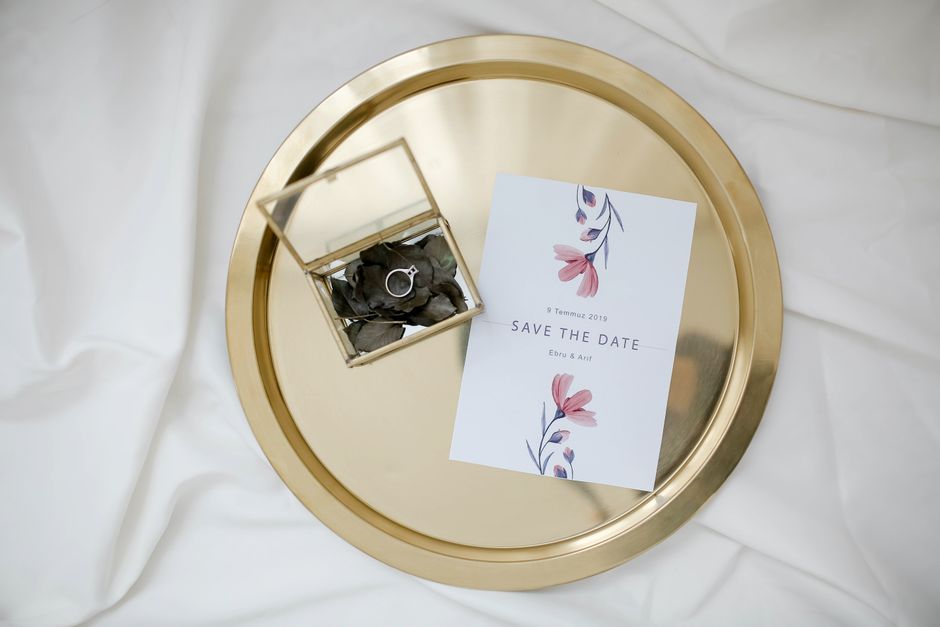
A save the date is a short heads-up that asks guests to hold a date before the formal invitation arrives. The timing question tends to surface early in planning, usually right after a venue and a date start to feel real. Published wedding etiquette guidance points to one broad window: six to twelve months before the wedding, adjusted for how far your guests have to travel and how much notice they need to arrange time off.
The Short Answer: Six to Twelve Months Before the Wedding
Save the dates generally go out six to twelve months before the wedding. Couples with mostly in-town guests and a local venue can work with the six-month mark and still give people plenty of notice. Couples planning a destination celebration should aim for the longer end of that range, because guests are booking travel rather than simply clearing an evening.
One widely repeated recommendation puts the sweet spot at eight to ten months out. That window gives you room to correct a mailing list, replace a returned card, or handle a guest who never saw a digital message, without bumping up against the four-month point where the notice starts to feel late.
There is also a design stage to plan for. Paper save the date cards can be ordered or digital versions customized as far as one to two years before the wedding. Ordering early does not mean sending early. It means the artwork, addresses, and wording are ready when your send window opens.
Timing by Wedding Type
The right send date depends less on the calendar than on what you are asking guests to do. A local guest who needs a babysitter has a very different task than a guest booking a flight.
| Situation | Suggested send window |
|---|---|
| Destination wedding | 9 to 12 months before |
| Local wedding, mostly in-town guests | 6 to 8 months before |
| Commonly cited sweet spot | 8 to 10 months before |
| Micro wedding under 50 guests | Can be skipped |
| Ordering or designing the cards | 1 to 2 years before |
Destination Weddings: Nine to Twelve Months
For destination weddings, send save the dates nine to twelve months in advance. Guests are coordinating flights, accommodation, and time away from work, and some will need to arrange travel documents or budget for a trip that costs more than a local evening out. A year of notice turns a complicated trip into a manageable plan. Nine months is the floor here, not the target.
Local Weddings and the Six-Month Mark
Local weddings with mostly in-town guests can send save the dates at the six-month mark. If your guest list includes a meaningful share of out-of-town friends and relatives, move earlier within the six to eight month range. Six months is a comfortable minimum for a local event, and eight months gives you a buffer for the people who check their mail once a week.
Micro Weddings Can Skip Save the Dates
For micro weddings with under 50 guests, you can skip save the dates entirely. When the guest list is small enough that you speak with most attendees regularly, a personal message or phone call does the same job. A formal card is still a nice touch, but it is not required, and skipping it removes a printing and addressing step from a short planning timeline.
Why Four Months Out Is Too Late
Under four months out from the wedding is considered too late for a save the date. At that point the card is competing with the invitation rather than preparing for it, and guests who need to book travel may already have made other plans. Ideally, save the dates go out no later than six months before the wedding. If you have slipped past the four-month mark, the practical move is to skip ahead and focus on getting invitations out, and to contact your most travel-dependent guests directly.
Save the Dates and Invitations Do Different Jobs
The two mailings are not interchangeable, and understanding the difference makes the timeline easier to hold. A save the date announces that a wedding is happening and gives the date, plus enough location information for guests to plan. It does not ask for a reply and it does not carry the full schedule of events.
An invitation is the formal request to attend. It carries the details a guest needs to actually show up and respond, and it is sent closer to the event once those details are locked. Because the save the date does the early warning work, the invitation does not need to arrive a year ahead. Sending both at once defeats the purpose of the first mailing and can confuse guests about when to respond.
A Simple Countdown for Your Send Date
- Confirm the date and venue first. A save the date is a commitment, so send it only when the date is genuinely settled.
- Build the guest list before you order anything. Ordering cards for a list that later shrinks wastes money and creates awkward conversations.
- Decide between paper and digital. Paper cards can be ordered and digital versions customized one to two years out, so the format decision can happen well before the send date.
- Set your send window based on travel. Destination weddings get nine to twelve months. Local weddings with mostly in-town guests get six to eight months.
- Send inside the window and keep a record of who received one. That list becomes your starting point for invitations.
- Follow with invitations closer to the event, once the schedule, menu, and RSVP details are final.

Applying the Same Logic to Non-Wedding Events
The published timing guidance covers weddings, but the underlying principle travels well to other large gatherings. The more travel, cost, and time off an event requires, the earlier guests need to hear about it. Milestone anniversaries, reunions, and multi-day conferences all benefit from early notice, and the same four-month floor applies: once you are inside four months, an early notice loses most of its value.
For non-wedding events, there is no single published number to follow. Check with your venue and your key vendors, then choose a date that lets your most distant guests make arrangements. If your event has a registration or ticketing step, treat the save the date as the announcement and the registration link as the follow-up.
Digital Save the Dates and RSVP Tracking
Digital save the dates change the logistics of the timeline without changing the etiquette of it. Because a digital card can be customized up to two years before the event, you can prepare it early and send it exactly when your window opens. Delivery is instant, address collection is easier, and guests can act on the notice the moment they receive it.
Platforms built for event organizers can fold this into the rest of the planning work. Eventweet, a mobile-first event platform, includes event creation tools with RSVP tracking and social sharing, so an early announcement and the follow-up list live in the same place rather than across a spreadsheet and a group chat. If you are tracking responses for a wedding-sized guest list, having the save the date and the RSVP record connected saves a round of manual sorting later.
Mistakes to Avoid
- Sending before the date and venue are locked. A save the date you have to correct creates more work than sending a few weeks later.
- Applying the six-month rule to a destination wedding. Nine to twelve months is the right range when flights are involved.
- Sending to people you are not certain to invite. A save the date is a strong signal, and it is difficult to walk back.
- Waiting past four months. At that point the notice is too late to be useful for travel planning.
- Treating the save the date as the invitation. Guests still need a formal invitation with the details and a way to respond.
- Printing or designing at the last minute. Cards can be ordered one to two years ahead, so the artwork does not need to compete with your send date.
Frequently Asked Questions
How far in advance should you send a save the date card?
Send save the dates six to twelve months before the wedding. Local weddings with mostly in-town guests can send at the six-month mark, while destination weddings should go out nine to twelve months ahead. Many planners point to eight to ten months as the sweet spot. Cards can be ordered or digital versions customized one to two years in advance, so the send date stays inside your control.
Is four months too late to send save the dates?
Yes. Under four months out from the wedding is considered too late, and ideally save the dates should go out no later than six months before the event. If you are already inside four months, put your energy into invitations instead and reach out personally to guests who need to book travel, since they are the ones most affected by the short notice.
Can you skip save the dates for a small wedding?
For micro weddings with under 50 guests, you can skip save the dates. When the guest list is small enough that you are in regular contact with most attendees, a personal message or call covers the same ground. A printed or digital card is still a nice gesture, but it is optional rather than a requirement of the timeline.
What is the difference between a save the date and an invitation?
A save the date announces that a wedding is happening and gives guests the date plus basic location information so they can plan ahead. It does not request a reply. An invitation is the formal request to attend, carries the full details, and includes the way to respond. The save the date comes first, and the invitation follows closer to the event.
Do save the dates and invitations go to the same people?
They should, in most cases. Your save the date list effectively becomes your invitation list, which is why it is worth finalizing the guest list before you order or send anything. Sending a save the date to someone you later do not invite puts you in an uncomfortable position, and adding new guests at the invitation stage is easier than removing them.